Gloria Jamison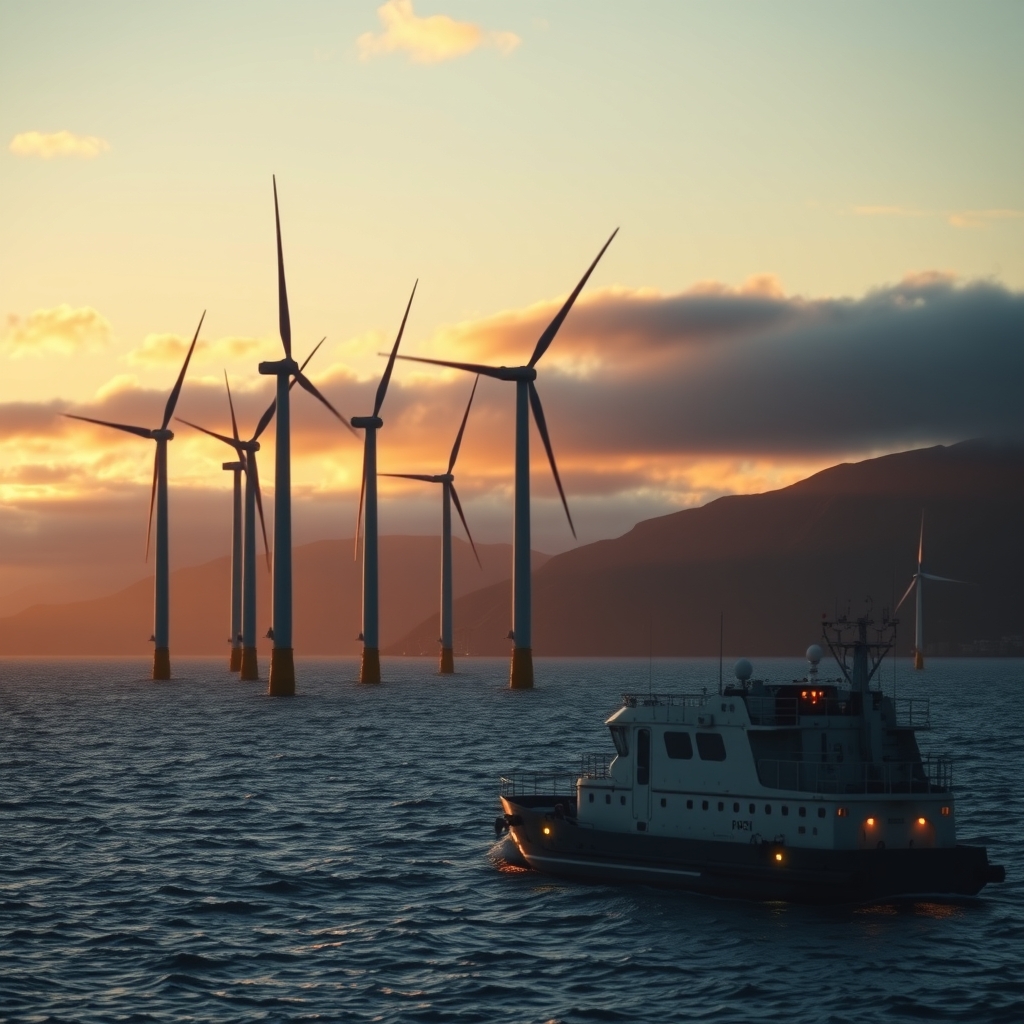
Norway, a nation whose modern wealth was built on oil and gas beneath the seabed, is now betting on what blows above it. A wave of new capital commitments has pushed the country's offshore wind pipeline to record levels, with developers, pension funds and industrial groups lining up for acreage in the North Sea.
From petroleum province to power plant
The sea areas that once made Norway an energy exporter through hydrocarbons are being re-mapped as generation zones. The two flagship areas, Sørlige Nordsjø II and Utsira Nord, have become the anchors of a program that aims to allocate large-scale capacity for both bottom-fixed and floating turbines. Floating technology matters enormously here: much of the Norwegian shelf is simply too deep for conventional foundations, and whoever industrializes floating wind first will own a global export product.
Why the money is moving now
Three forces are converging. First, Europe's push for energy security has turned firm, non-Russian power supply into a strategic asset. Second, the cost curve for floating platforms is finally bending downward as designs are standardized. Third, Norway's supply chain — shipyards, subsea engineering, dynamic cabling expertise from decades of offshore petroleum work — can be redeployed with less friction than in almost any other market.
For the companies involved, offshore wind is no longer a side bet. Utilities and oil majors alike are reporting that their project pipelines in the Norwegian sector are oversubscribed with partnership interest, and suppliers of vessels, moorings and high-voltage cable are quoting delivery slots years out.
What it means for investors
Investors looking at the theme should watch three signals. The pace of government auctions and the level of contract-for-difference support will decide project economics. Grid build-out — including possible hybrid cables that serve both Norwegian consumption and export to European markets — will decide how much of the power finds premium prices. And the floating-wind cost trajectory will decide whether the sector graduates from subsidized pilot projects to self-sustaining infrastructure.
None of this is without risk. Inflation in steel, vessels and financing costs has already forced developers elsewhere in Europe to renegotiate or abandon projects. But Norway enters the race with cheap balancing hydropower, deep offshore competence and a state with both the balance sheet and the political will to see the buildout through.
The bottom line
The North Sea has made Norway rich once. The billions now flowing into offshore wind are a wager that it can do so again — this time with an energy source that does not run out. For the energy transition, few bets in Europe matter more.